
Sculpture/ 3-D
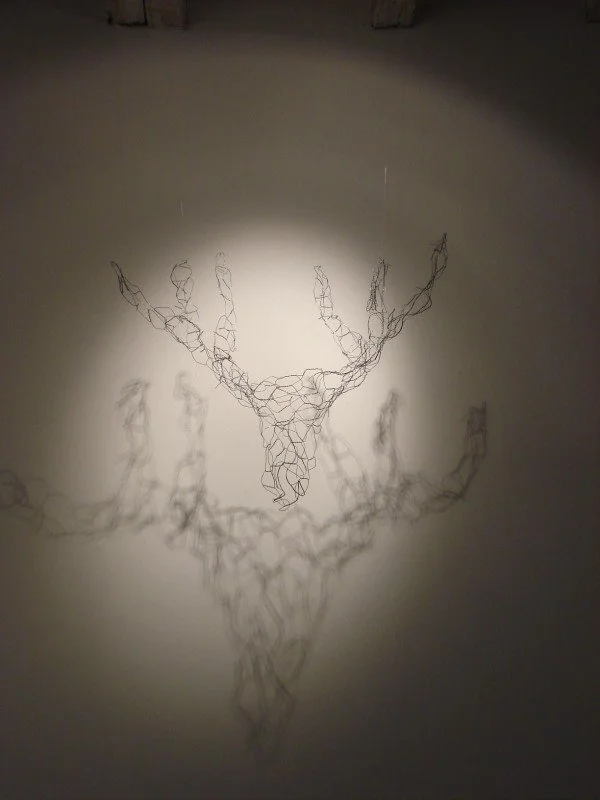
In the Bones; chicken wire, fishing line, light; 2009; © Meg Thompson Stanton
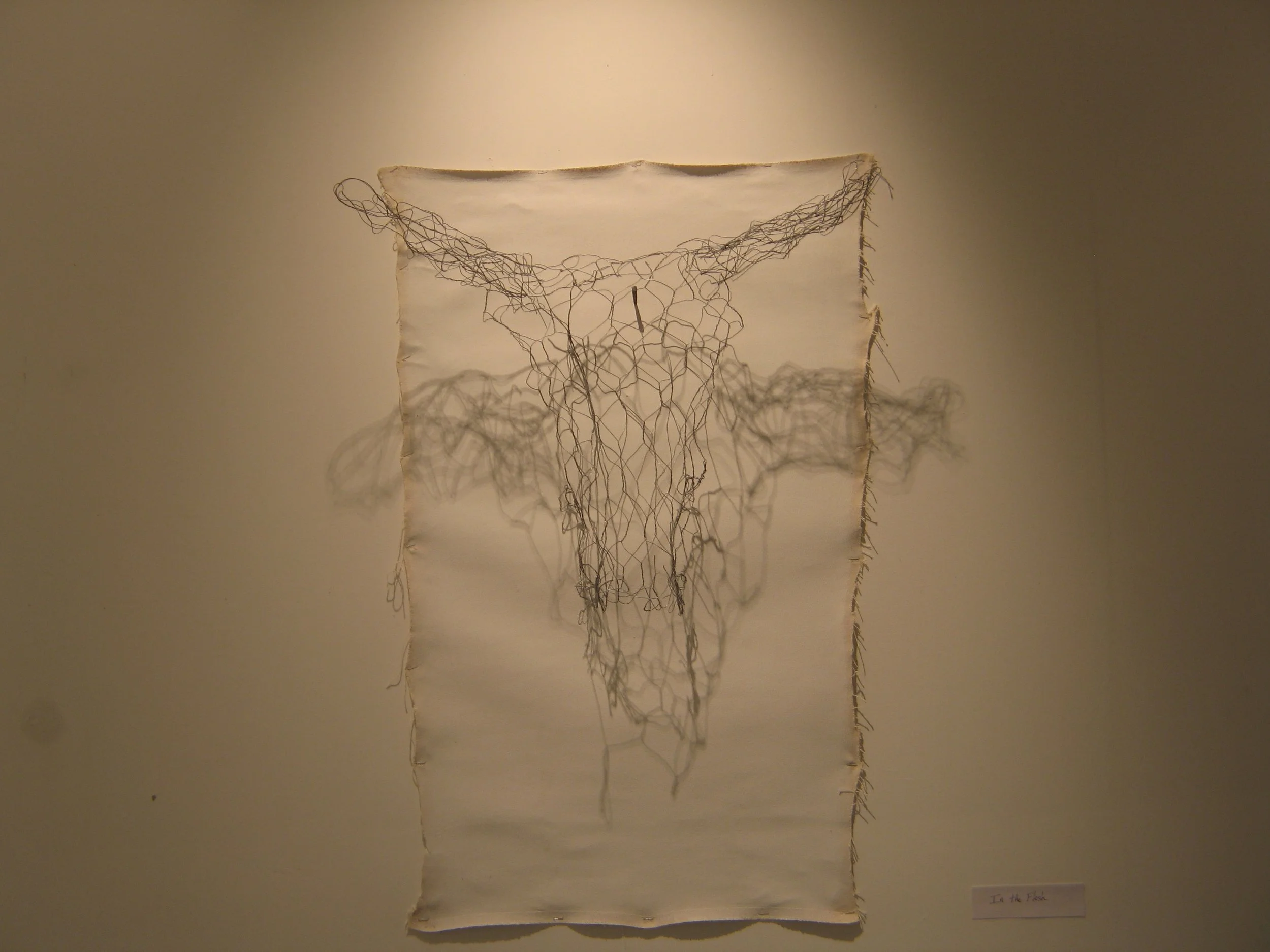
In the Flesh; chicken wire, canvas, light; 20″ x30″; 2008; This skull shape fleshes out the image of the live cow only when the lighting is right. The shadow works to emphasize the presence of fluid life from base forms; life-like energy from still life matter. I personally appreciate how the horns in the metal sculpture transform in the shadow into docile ears. © Meg Thompson Stanton
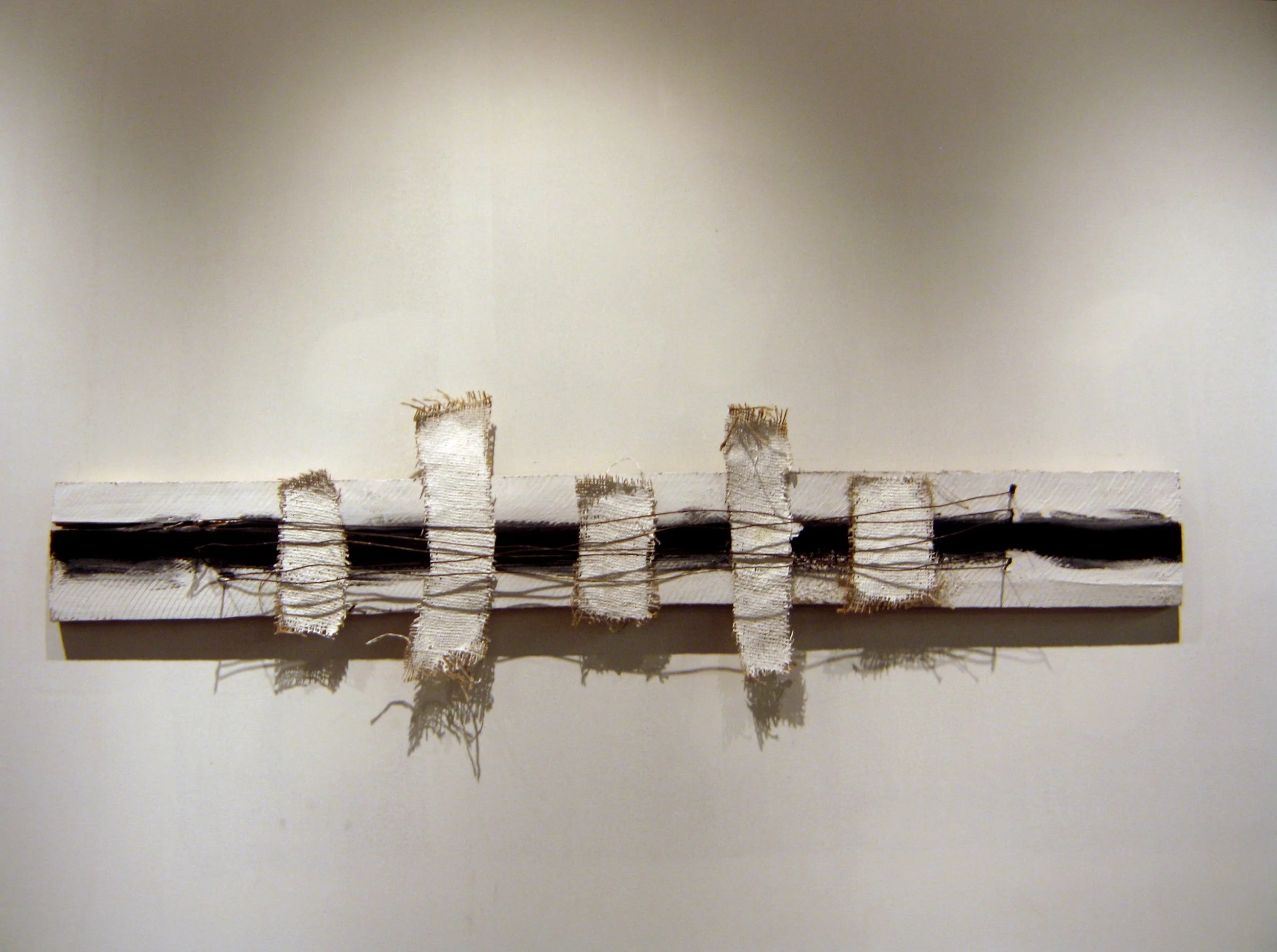
But We Are Family; found materials (the wood base and nails), burlap, house paint, fencing wire, acrylic paint; 2008. This piece refers to the tight bonds of family, for better or worse, that remain with us no matter how we personally relate to our family. There is a constant tension stringing across blood lines forever connecting families and sometimes this is one’s greatest asset while at other times it is a detriment. The separate pieces of burlap indicate individuals, while the common background and wire strung across the front shows them inextricably linked. While colonial survival in parts of the West requires fierce individualism, it can also be the greatest challenge to overcome when others are inevitably involved. 2008 © Meg Thompson Stanton
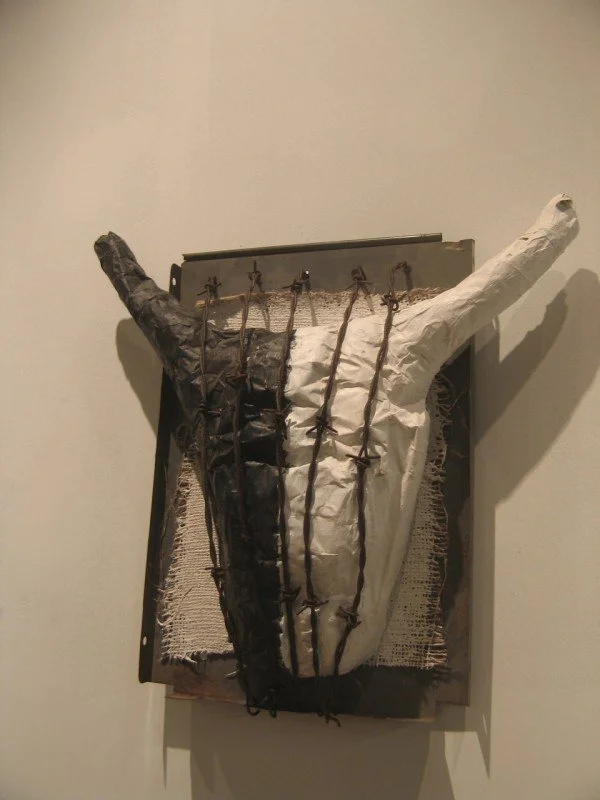
Tradition; found materials: metal cover to an electrical box, barbed wire, burlap, house paint, acrylic paint, masking tape, newspaper; 2008. The five strands of wire running over the top of the skull echo the common 5-wire fence used in the West to fence out livestock. The law of the West, leftover from the open range days of the big cattle barons, is one must fence livestock out of their property if they don’t want them on their land. This piece speaks about the tough transition traditional ways of life in the West are in right now- both on a personal level and broader social level. And that conflict in itself comprises the history of the West since whites began trying to “settle” it. © Meg Thompson Stanton
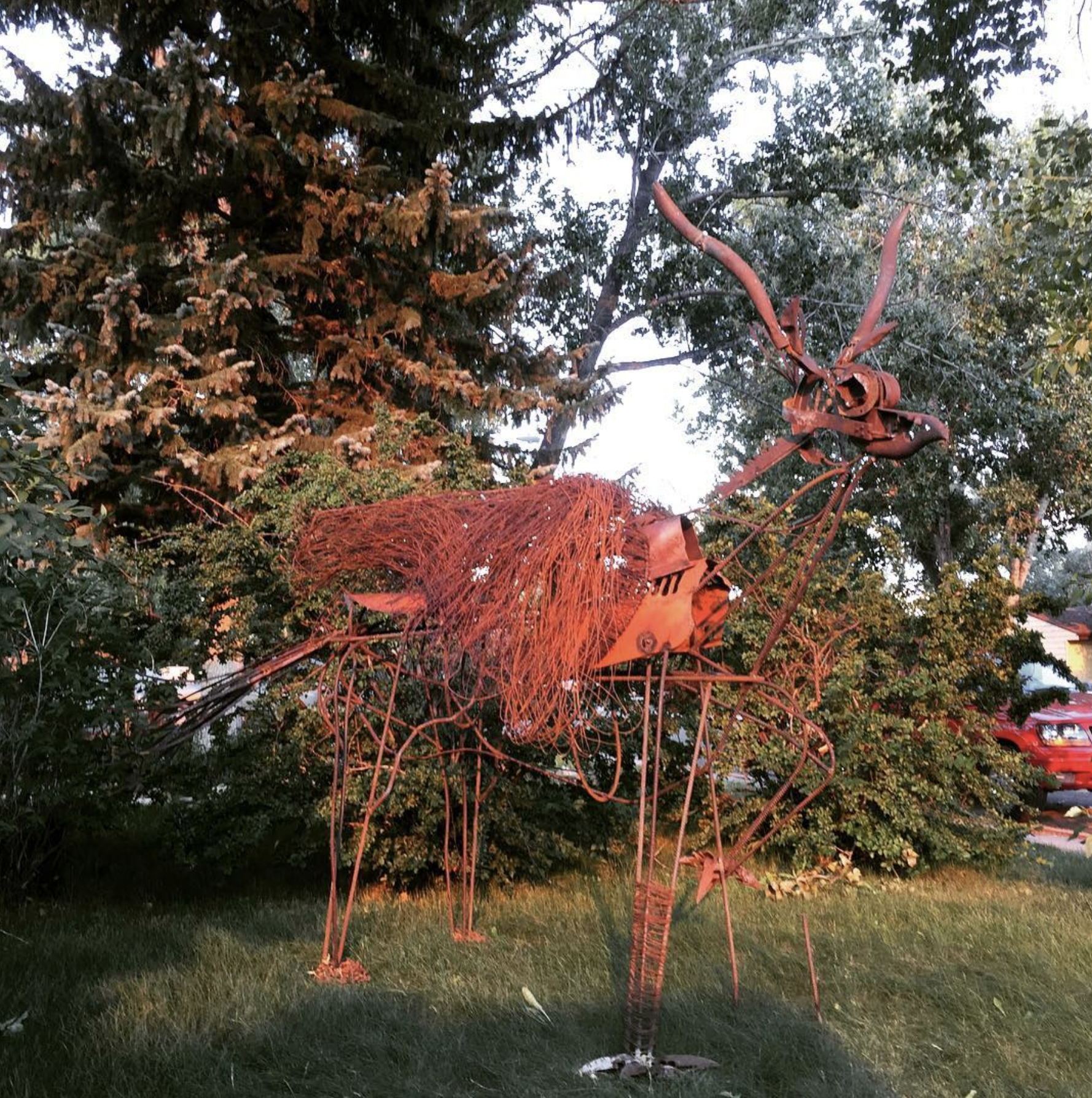
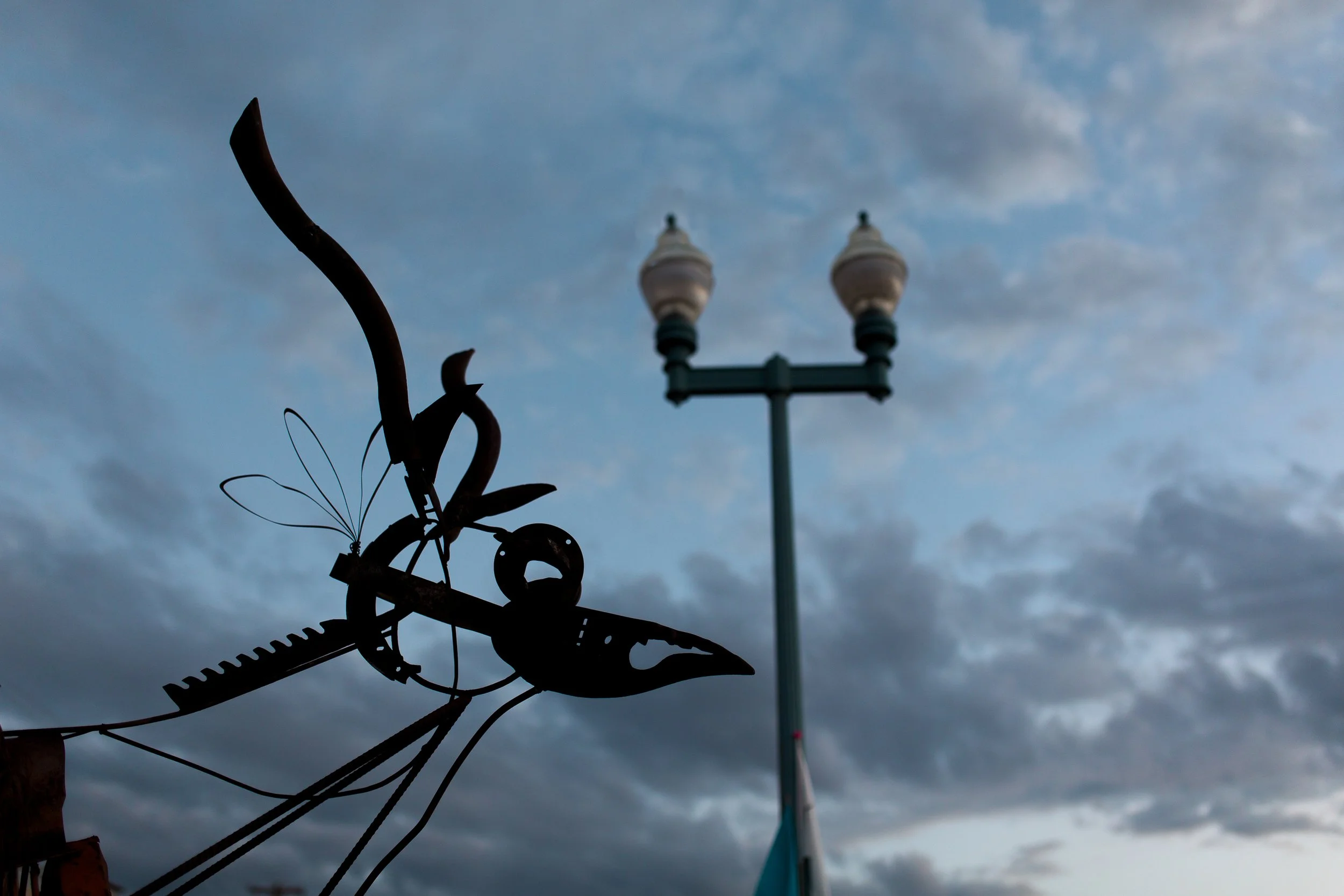
Wyoming Gryphon; found metal- bailing wire and mechanical parts from an old dump site; I made this with fellow friend and artist Mathew Sigel for the Wyoming Art Party Parade Project
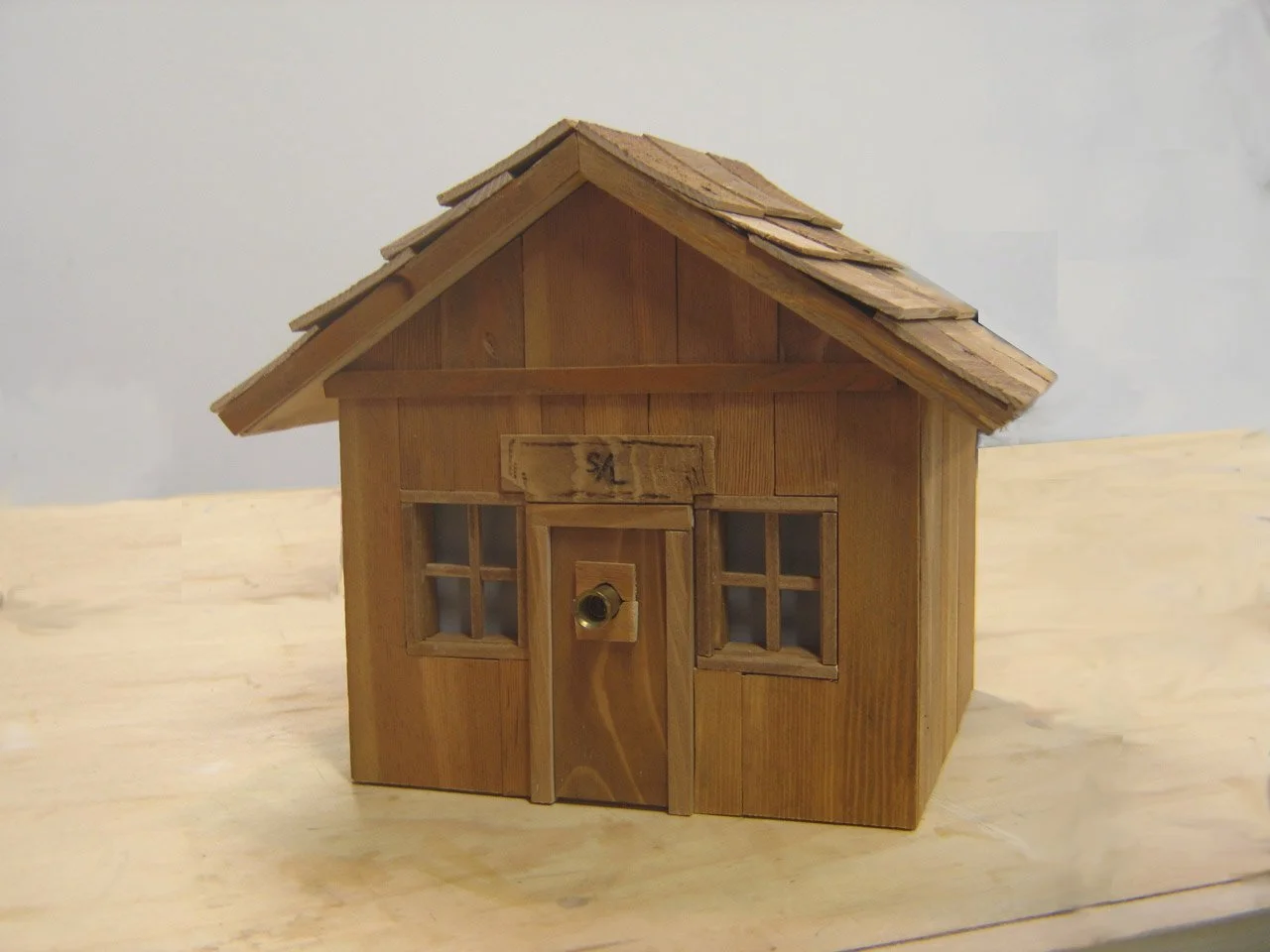
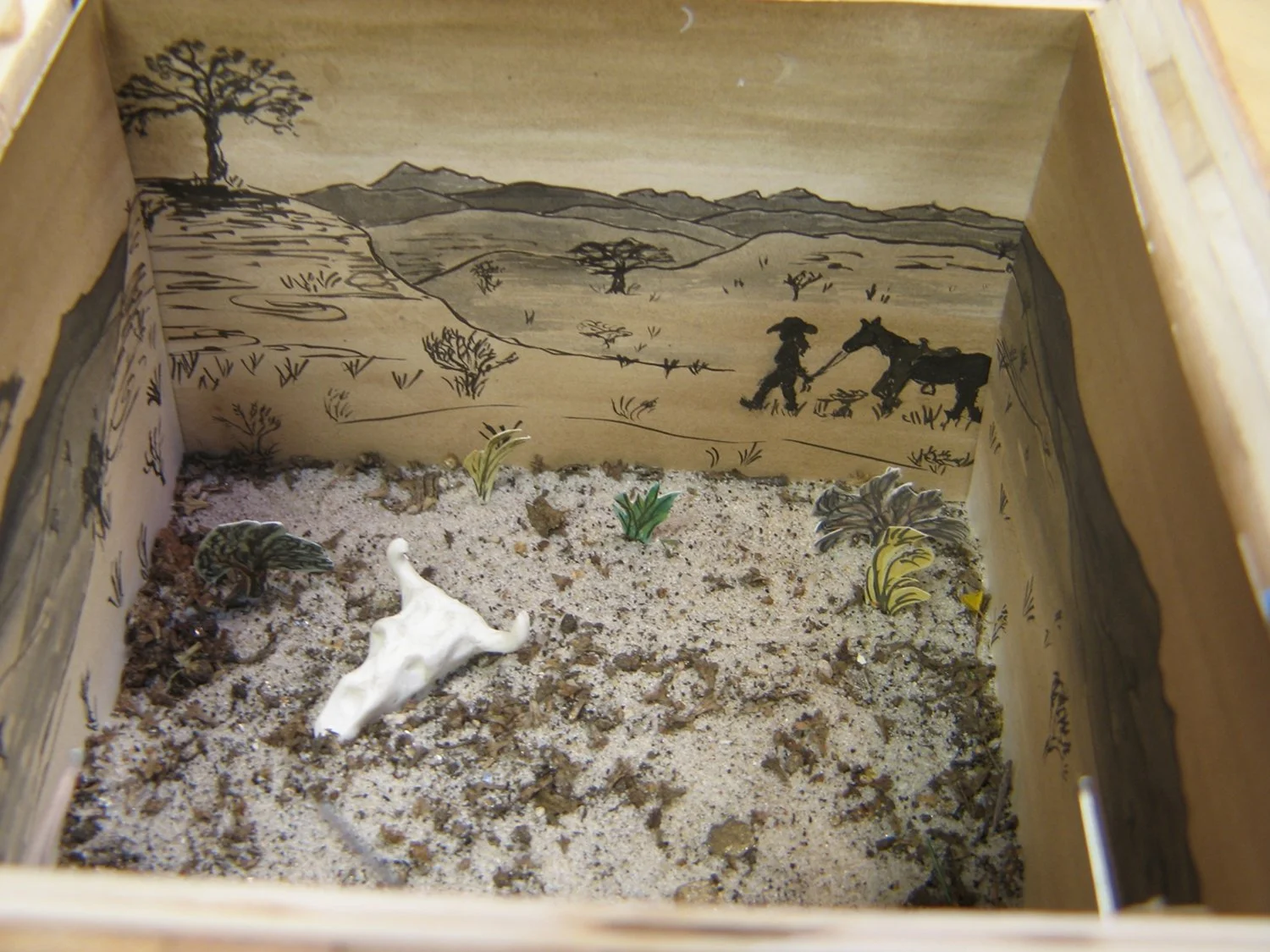
What’s Outside Becomes Inside; reclaimed wood, sand, sculpty clay, paper, sumi ink, walnut ink, LED lights, batteries, peephole; 7″ x 7″ x 10″; 2008. © Meg Thompson Stanton
This diorama box shows how our internal landscape mirrors our physical one. In the West, even when one is inside, there is an attuned awareness about what is happening outside. It is a 7” x 7” x 10” miniature house made out of reclaimed scrap lumber. The inside walls are painted as a landscape, with the floor hosting sand, plants, and a skull, giving the scene a 3-D effect. There is a peephole in the door and when the viewer looks inside they see the external landscape. The internal scene is lit by small battery operated LED lights which give the effect of evening light. The wide angle of the peephole affords a panoramic view as if looking outside at the landscape.
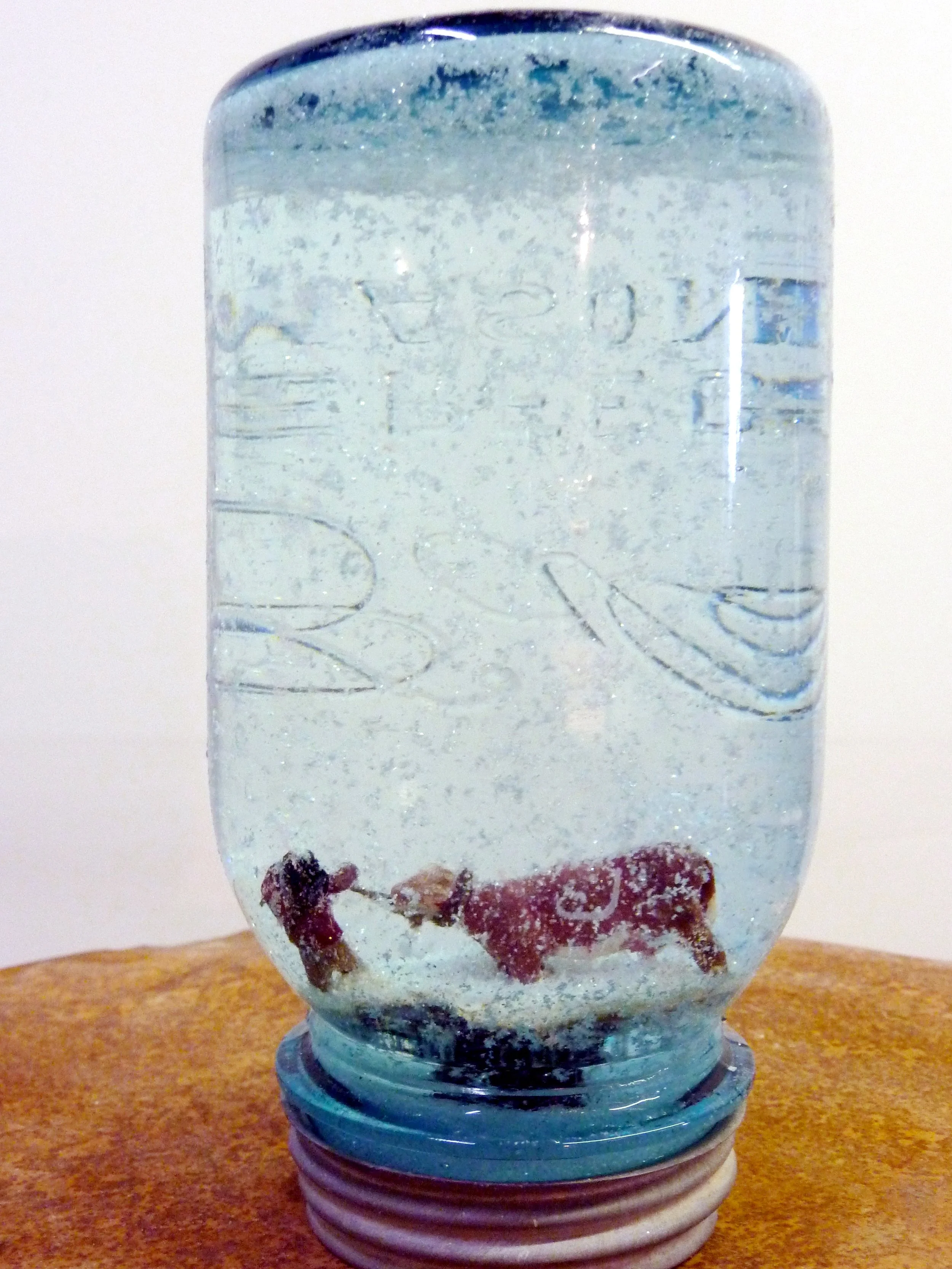
Labor Begins in a Snowstorm; antique mason jar, water, glitter, sculpty clay; 2010. This is in my homemade snowglobe series which depicts the harsh realities of living in the Western landscape in contrast to our romanticized visions. Calving time in the Rockies is often in the spring and inevitably there are many spring snowstorms to contend with. This scene shows a woman rancher trying to get a pregnant cow into cover before she calves. The cow doesn’t want to go anywhere, obviously. This piece was in a group show in the summer of 2010 for former residency artists at School of Visual Arts: “Abstract Intentions” curated by Keren Moscovitch and David Gibson. © Meg Thompson Stanton
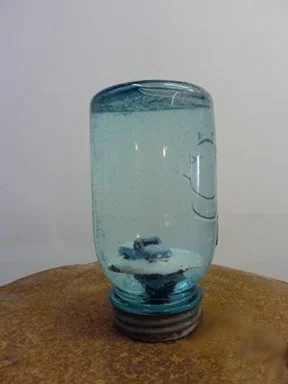
Stuck Truck; sculpty clay, water, glitter, old blue Mason jar and zinc top; 2010. This is in my homemade snowglobe series which depicts the harsh realities of living in the Western landscape in contrast to our romanticized visions. One of the most dangerous elements of living off the main highways is the possibility of getting stuck in a windy snowstorm (especially before the days of cell phones). Many people have gotten lost and froze to death attempting to walk home in a blinding blizzard. © Meg Thompson Stanton
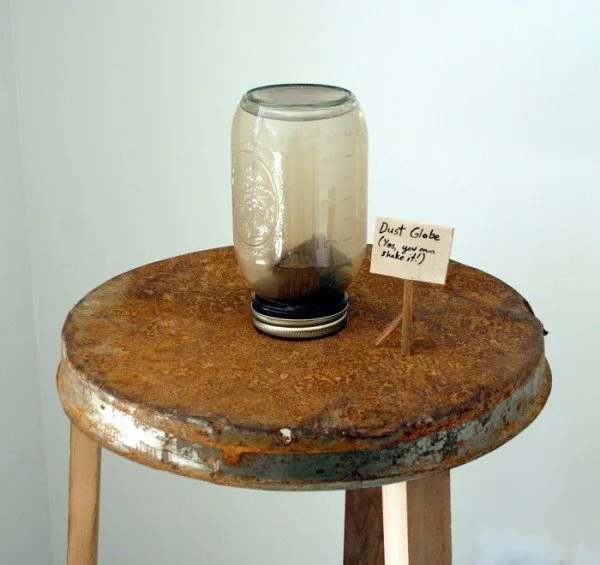
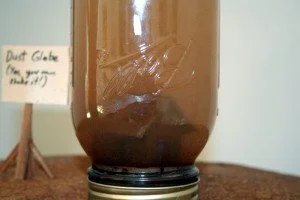
Dust Globe; canning jar, red sand, water, Sculpty clay, rusted tin pan, barn wood; 2009. This is the first in a series of homemade snow globes. Inspired by the history of the survivors of the Dust Bowl, there is a small prairie house (made out of Sculpty clay) inside an upside down canning jar that is full of water and fine red sand. When the viewer shakes and turns over the Dust Globe, the sand swirls around the little house in a visual likeness to the dust storms of the 1930s. This series plays with the tension between romantic rural imagery and the harsh reality of surviving in extreme environments. © Meg Thompson Stanton
Water in the West
I initially titled this piece “Regeneration.” I made a life size cow skull out of plaster with a bullet hole in the forehead. In the original piece, blue water dripped from the hole into a glass vase with sand in it. To me, the installation piece represented life coming from death; the elements taking the minerals back to the ocean where it starts all over again. But I always felt like this piece had more to say. Finally it hit me that this piece is really about the conflict of water in the West– because that is the root of life in the West. The colonized West is built upon promised water that does not exist. We are currently running head on into this false assumption.
“Water in the West”; plaster cow skull model, monopoly game, tin pan, red Wyoming sand, sculpty clay, cloth, water; 2008. I have reworked this plaster cow skull piece. (see other cow skull project) It is still a work in progress. This piece is about water conflicts in the West. Water is dripping from the cow skull onto model of a resort community. I used Monopoly game pieces, Wyoming red dirt and scuplty clay to make the scene.
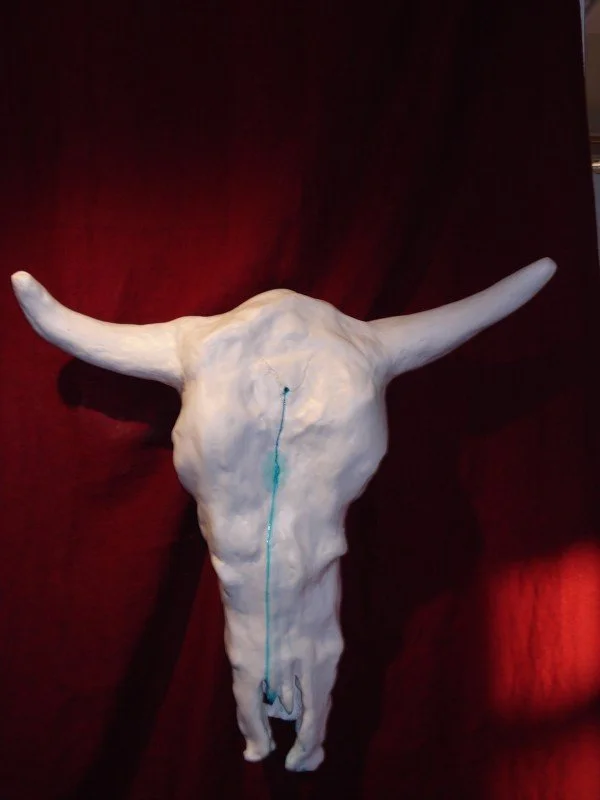
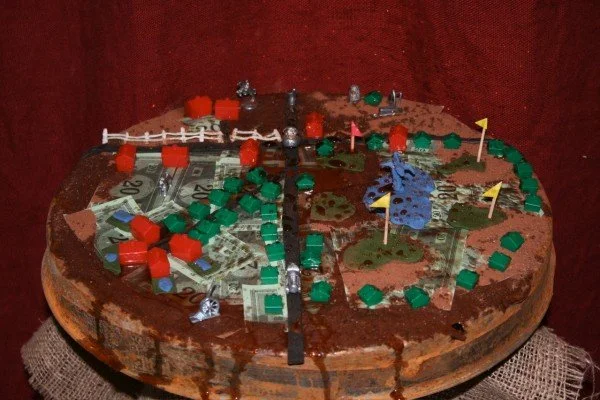
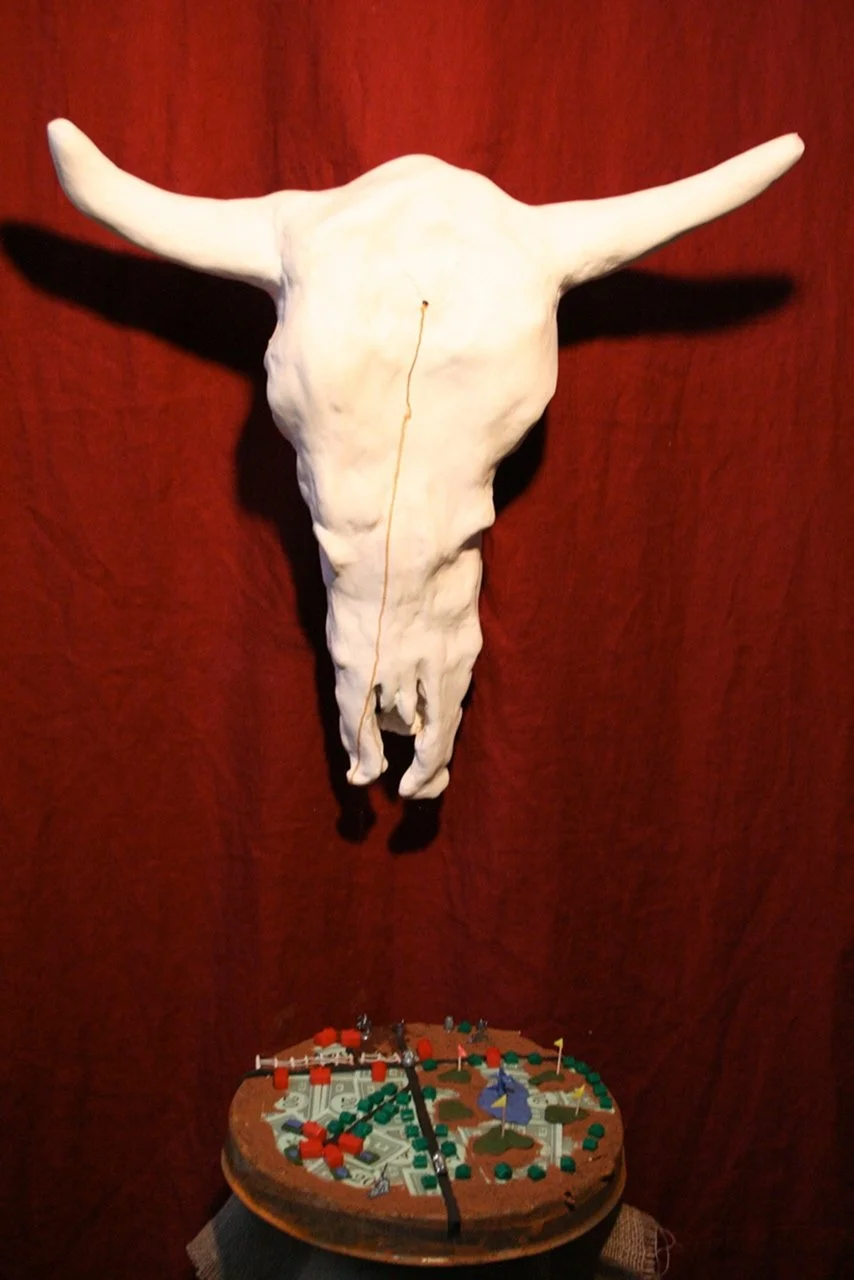
Water in the West; plaster cow skull model, monopoly game, tin pan, red Wyoming sand, sculpty clay, cloth, water; 2008; © Meg Thompson Stanton.